

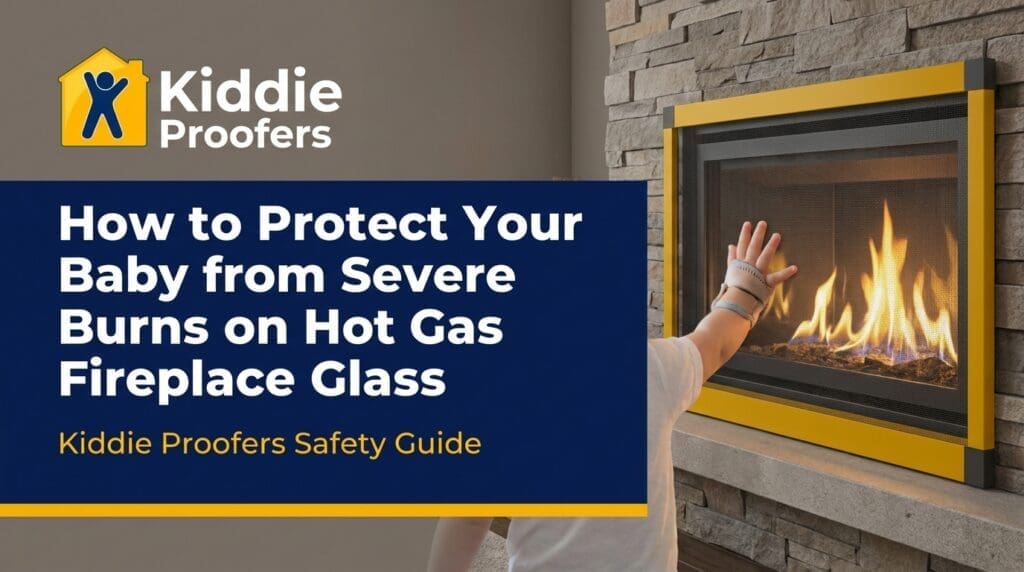
Gas fireplaces provide a cozy ambiance during colder months, but they harbor a hidden hazard that catches many parents off guard. The glass panel on a gas fireplace can reach scorching temperatures, often exceeding 400 degrees Fahrenheit, in just a few minutes. Because this glass remains dangerously hot for up to an hour after the flames are turned off, understanding how to protect your baby from severe burns on hot gas fireplace glass is absolutely critical for any family.
Crawling infants and early walkers are naturally drawn to the flickering light of a fire, putting them at extreme risk for rapid, catastrophic thermal injuries. By implementing the right physical barriers, establishing strict supervision habits, and knowing exactly how to respond if an accident occurs, you can keep your child safe while still enjoying the warmth of your home.
The Hidden Danger of Hot Gas Fireplace Glass
Unlike traditional wood-burning hearths where the open flame is an obvious deterrent, modern gas units feature a clear glass front that separates the fire from the living space. This glass acts as an intense heat conductor. Parents often assume that flipping the switch immediately eliminates the danger. However, the glass retains burning heat long after the fire is extinguished. A child who touches the glass even 30 to 45 minutes after the fireplace has been shut off can still sustain serious injuries.

Why Babies and Toddlers Are Highly Vulnerable to Fireplace Burns
Physiological Factors: Thinner Skin
Infant and toddler skin is significantly thinner than adult skin. Because their epidermal layer is still developing, thermal damage penetrates much deeper and faster. An adult might brush against a hot surface and pull away with a minor red mark, whereas a baby touching that same surface for a fraction of a second can suffer deep, partial-thickness or full-thickness burns.
Behavioral Factors: Curiosity and Mobility
Young children are driven by exploration. The bright, dancing flames of a gas fireplace are incredibly enticing to a curious toddler. Furthermore, babies lack the immediate withdrawal reflex that adults have developed. When they touch hot glass, they may freeze or lean into it rather than instinctively pulling their hand away. Our lead safety evaluator, who has a background in pediatric nursing, frequently reminds parents that this combination of high mobility, natural curiosity, and delayed reflexes makes unshielded fireplaces highly dangerous.
Essential Safety Screens and Barriers for Gas Fireplaces
The most effective way to prevent thermal injuries is to physically block access to the heat source.
Installing Fixed Fire Screens
A fixed fire screen attaches directly to the frame of the fireplace. While many newer gas fireplaces come with a factory-installed mesh screen, older models may not. It is important to ensure that any attached screen is securely fastened and designed to absorb and dissipate heat so that the outer layer remains safe to touch.
Using Freestanding Safety Gates
For ultimate peace of mind, a freestanding hearth gate creates a wide perimeter around the entire fireplace area. As certified professional childproofers, we specialize in custom gate installations tailored to your specific living room layout. We are authorized installers for premium safety gate manufacturers, which means we use heavy-duty, interlocking metal panels that will not collapse if a child leans on them. Securing a gate to the adjacent walls ensures your baby cannot crawl behind or push the barrier closer to the hot glass.

Commercial Heater Guards
If a large gate is not feasible, commercial heater guards offer another layer of protection. These heavy-duty mesh enclosures fit over the fireplace and are specifically engineered to stay cool. When selecting a guard, ensure it is anchored properly so it cannot be tipped over by an exploring toddler.
Active Supervision and Creating a Safe Distance Zone
Physical barriers are essential, but they must be paired with consistent behavioral rules to ensure comprehensive safety.
Establishing a Clear No-Play Zone
Keep all toys, books, and baby gear well away from the fireplace. If a ball rolls near the hearth, a child will instinctively chase it. During our comprehensive in-home hazard assessments, we help parents map out safe play areas that naturally direct a child’s attention away from heat sources. We recommend creating a designated no-play zone of at least three feet around the fireplace.
Maintaining Constant Visual Supervision
Never leave a baby or toddler unattended in a room with a running fireplace, or one that has recently been turned off. Active supervision means having your eyes on your child at all times. If you need to leave the room, take your baby with you or place them in a secure playpen.
Immediate First Aid: What to Do If Your Baby Touches Hot Glass
Even with the best precautions, accidents can happen. Knowing exactly how to respond in the first few seconds can significantly reduce the severity of the tissue damage.
Properly Cooling the Burn
If your child touches the hot glass, immediately run the burned area under cool, running water for a full 20 minutes. This is the single most important first-aid step, as it stops the burning process and provides pain relief. Remove any clothing or jewelry near the burn, as swelling can happen rapidly. However, if clothing is melted or stuck to the skin, do not pull it off; cut around it instead. Once cooled, loosely cover the area with a clean, dry, lint-free bandage or cloth.

Harmful Home Remedies to Avoid
Never apply ice or ice water to a burn, as extreme cold restricts blood flow and can cause further tissue damage. Additionally, avoid using old home remedies like butter, mayonnaise, toothpaste, or heavy ointments on a fresh burn. These substances trap heat inside the skin and increase the risk of a severe infection.
When to Seek Emergency Medical Care
A baby’s skin is highly sensitive, and what might look like a minor injury can quickly escalate.
Identifying Severe Burn Symptoms
Superficial burns usually present as redness and mild pain. However, if the skin immediately blisters, looks waxy, white, leathery, or charred, the burn has penetrated deeper layers of tissue. A burn larger than a small coin on an infant is considered significant and requires professional evaluation.
When to Call Emergency Services
Call emergency services immediately if you notice any of the following:
- The burn covers a large area of the child’s body.
- The injury is located on the face, hands, feet, or groin.
- The burn crosses over a major joint, which can impact mobility as it heals.
- The skin appears white, leathery, or charred.
Do not delay seeking medical attention for deep thermal injuries. While waiting for help, keep your child calm and warm, as large burns can cause a rapid drop in body temperature.
Resources for Burn Prevention and Support
Educating yourself and your caregivers is an ongoing process. We highly encourage parents to take infant CPR and first-aid courses, and to consult their pediatrician about burn prevention strategies. Local fire departments and pediatric health organizations also offer excellent safety materials for families.
Protecting your family is our ultimate priority. With years spent specializing in infant safety, our team has evaluated thousands of homes and installed thousands of magnetic cabinet locks, premium window guards, and secure stair gates. Our installation technicians undergo rigorous background checks, so you never have to worry about who is entering your home. We guarantee prompt service so your home is secured before your baby starts crawling, and we back our work with a commitment to return and adjust any safety gate that becomes loose within the first year. Best of all, we always leave your home completely clean and free of drilling dust, giving you the ultimate peace of mind.

To choose between a perimeter gate and a fixed screen, compare freestanding fireplace gates versus mounted screens for heat transfer, stability, and toddler push resistance.